


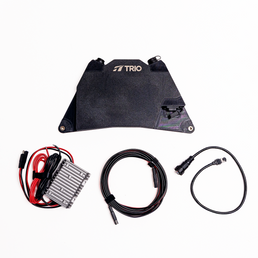


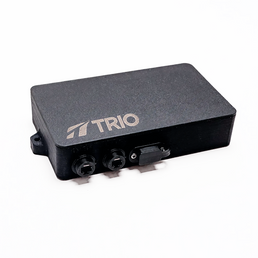


So you're on the go, your Starlink app is showing obstruction, and you know it would work better if it was on the roof of your vehicle.
But is mounting a Starlink to your car safe? Can a Starlink fall off the roof, even after being securely mounted?
I'm here to tell you, yes, it's safe to mount your Starlink to the roof of a vehicle, but only if you take your roof's material, Starlink attachments, and elements like wind into consideration! (Don't worry, it's all a lot easier than it sounds.)
We'll break it all down below, so you'll forget your Starlink is even on your roof while you drive.
Can a Starlink Withstand High Winds?
✓ Yes!
Let's get this out of the way first; in the past few years, companies have stepped up to create rock-solid solutions to Starlink's limited mounting accessories. This is possible because the Starlink itself is already designed to work through the elements.

On the Starlink's capabilities itself, with no mount: while its weathering details are not commonly advertised, Starlink's website does boast that it can withstand:
"...medium-to-heavy rainfall, endure up to 160+ kph (99+ mph) winds comfortably, and can survive from -40°C (-40°F) to 43°C (110°F) temperatures."
Starlink Weather Specs at a Glance
| Spec (per manual) | Starlink V5 | Starlink Mini |
|---|---|---|
| Operational Temperature | -30°C to 50°C (-22°F to 122°F) |
-30°C to 50°C (-22°F to 122°F) |
| Wind Speed (mounted) Operational | 265 kph (165 mph) | 96 kph+ (60 mph+) |
| Snow Melt Capability | Up to 40 mm / hour (1.6 in / hour) |
Up to 25 mm / hour (1 in / hour) |
Can I Safely Mount a Starlink to My RV, Van, or Car?
✓ Yes!
What originally began with 3D-printed mounts that were sold in Etsy stores has since been iterated on by the best Starlink mounting companies to allow for Starlink use while driving. (Starlink roof mounting has come a long way!)


| TRIO Roof Mount | Max Speed | Feature |
|---|---|---|
| Gen 3 Speedmount | 120 mph | Wraparound for Standard dish |
| Gen 3 Flatmount | 75 mph | Flush low-profile mount |
| Mini Speedmount | 120 mph | Wraparound for Mini dish |
| Mini Flatmount | 75 mph | Flush low-profile for Mini |
Depending on what your Starlink model is, as well as what type of vehicle you're planning on mounting it to (e.g., a slower moving RV, a speed boat, or a show-floor Lamborghini), there exist different mounts and mounting accessories that safely allow anyone to travel with their Starlink on the roof, all while on and functioning — even in high winds! (More on the specifics below.)
How Does Wind, Drag, and Vibration Affect Starlinks?
The wind, drag, and vibration of highway speeds can impact a Starlink's connection, both its internet connection and literal connection.
This is where the specific mount you choose matters (as well as how you choose to mount it).
The TRIO Flatmount: Built for Everyday Driving
The TRIO Flatmount for both Standard and Mini models is a low-profile, sleek and sturdy mount meant to withstand typical driving speeds of 75 mph and lower.
It's perfectly suited for most driving conditions (especially for vehicles like RVs and tractors).

How Does the Mount Stay On Reliably?
You have the option of drilling it into your vehicle if you'd like, but no-drill options, such as suction cups for sunroof/glass setups, and industrial-strength magnets for magnetic steel roofs, allow you to travel with non-permanent mounting in mind.
If you're concerned about magnets holding on your Starlink… well, don't. Professional-grade, non-permanent attachments are designed to be so strong, you can literally stand on your Starlink.
Flatmount models are especially good at bumpy terrains, where vibration is more of a concern, as opposed to high-speeds.


It's worth noting rigid roof types may pose some slight issues, but the right mounting technique will still keep your Starlink safe and sound. For more info, check out TRIO's attachment page.
What About Mounting My Starlink for Faster Speeds?
If you're especially concerned about speed and wind while traveling with your Starlink, you need to consider a mount like the TRIO Speedmount.

This mount type comes in both Standard and Mini sizes (with a V5 mount upcoming for the corresponding new model).
Choose the Speedmount if you are frequently intending to drive on the highway, as it's especially engineered to withstand up to 120 mph speeds with no issue to structural integrity, regardless whether it's mounted on the top of the vehicle, the hood, or even the side! Because of this endurance and versatility, this is the type of Starlink mount first-responders and emergency services most frequently use.
Performance and Maritime Starlinks on Boats
And yes, by the way, there is a version of this mount for Gen 2 and Gen 3 Maritime/Performance Starlinks, too, as this is graded for especially choppy and fast speeds. This means if you buy a professional mount to match your Performance-grade Starlink, you can keep your Starlink on the hull of a boat, no problem.
And because boats sometimes produce weird surfaces, there even exist swivel attachments to use in combination with any attachment type. (Swivel attachments can be used on any vehicle type, though are frequently utilized for boat roofs and hulls.)


Can I Reduce Wind Drag on My Starlink Mount While Driving?
You can reduce the wind drag and vibration on a Starlink Flatmount (and especially a Starlink Speedmount) if you happen to have a roof rack, or some other physical obstruction to mount your dish behind or under.

All TRIO mounts are low profile Starlink mounts, meaning they're specifically engineered to be flat and aerodynamic, regardless of its installation placement. Yet given the option, while you don't need to worry about your Starlink falling off, your internet connection might be improved, depending on a combination of variables.
Thus, while not necessary, installing it behind a wind buffer of some kind might further enhance your Starlink connection score as you drive.
Will My Starlink Withstand Temperature Extremes While Mounted?
✓ Yes!
Unless you are driving straight into the middle of a volcano or through the North Pole in December, TRIO mounts are specifically engineered to withstand temperatures of -40 degrees Fahrenheit to 150 degrees Fahrenheit.
If you're extra nerdy about how it works, TRIO mounts are made of heavy-duty injection molded ASA plastic with UV resistance. They're designed with drain holes that prevent water buildup on the dish surface, and an open-top design that keeps the original equipment manufacturer (OEM) surface fully exposed, which means heat transfer is completely unhindered.

The TRIO Mini Speedmount also has an optional Polycarbonate Cover.
This is a clear, impact-resistant shield that installs over the Mini Speedmount and protects the dish from falling branches, debris, and hail while being clear enough to let the signal through without interference.
Altogether, this means your Starlink could literally take a hit while going 120 mph through a windstorm, all while you check your emails from inside the vehicle!
Protip: if you're looking for an interior mounting option, check out the TRIO Interior Mount.


